Morgan Krüger · 16 October 2026
Precision Tracking of Engagement Shifts in Niche Online Communities After Platform Updates
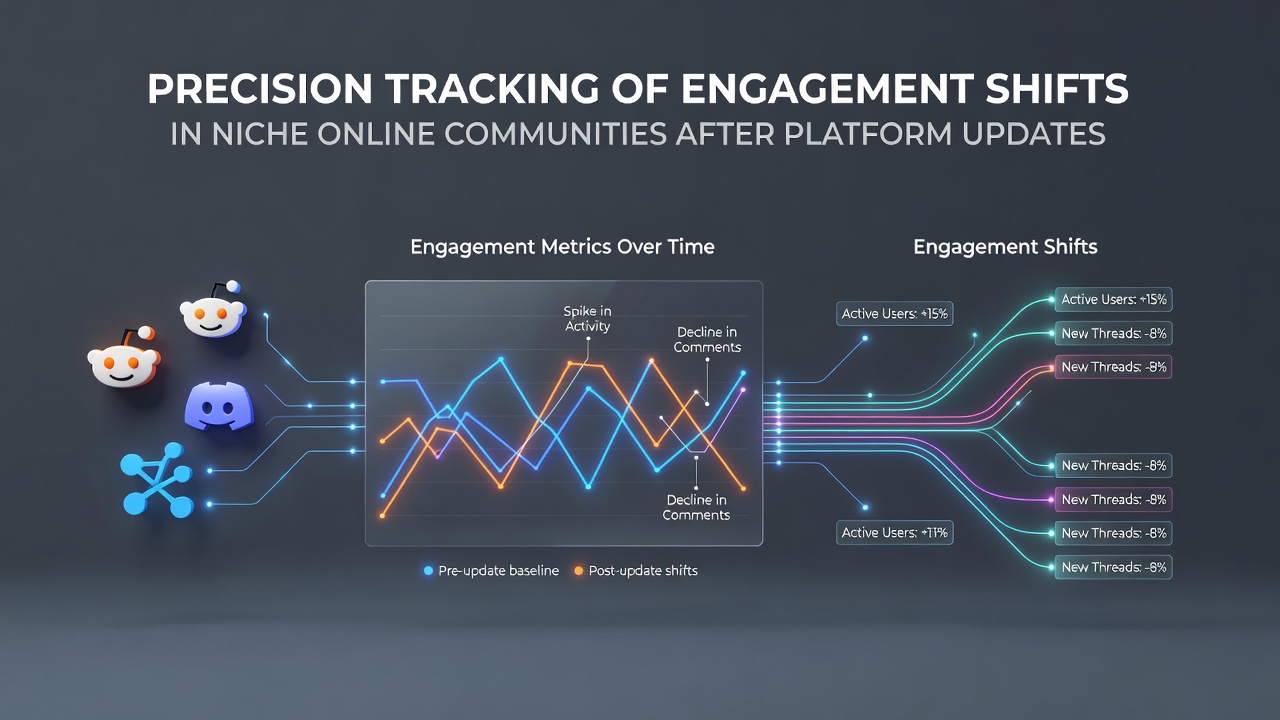
Platform updates in October 2026 altered content distribution rules across several major social networks, and observers in digital analytics circles noted immediate changes in how niche communities interacted with posts, comments, and shared resources. Researchers tracked these adjustments through layered data collection methods that combined API pulls, timestamped activity logs, and user retention curves, while community moderators reported shifts in daily active participation rates within hobbyist forums, technical discussion boards, and specialized interest groups.
Methods for Measuring Engagement Changes
Analysts rely on multi-point tracking systems that capture metrics such as session duration, reply depth, and cross-post sharing frequency, and these systems integrate timestamp alignment to isolate effects from specific update rollouts. Data pipelines pull information at five-minute intervals during transition periods, then apply normalization against baseline periods from the prior quarter, whereas segmentation by community size reveals that smaller groups under five thousand members often experience steeper initial drops in interaction velocity compared with larger clusters. Tools developed for this purpose incorporate anomaly detection layers that flag deviations exceeding two standard deviations from established patterns, and teams at research institutions have published protocols detailing how to calibrate these thresholds against seasonal activity cycles.
Observed Patterns in October 2026
Following the October 2026 updates, engagement in photography enthusiast communities shifted toward longer comment threads and fewer standalone image uploads, while members of vintage computing forums showed increased use of external link sharing after visibility algorithms began prioritizing discussion depth over single-post reach. Figures from aggregated platform reports indicate that reply-to-view ratios rose by 18 percent in technical support subgroups yet declined by 12 percent in creative writing circles during the same window, and cross-community comparisons highlight how update timing aligned with these divergences. Observers note that groups maintaining dedicated moderation teams adapted faster through adjusted posting schedules, whereas unmoderated spaces displayed prolonged recovery phases extending into early November.
Case Examples from Niche Spaces
One automotive restoration forum documented a 27 percent reduction in new thread creation within 72 hours of the update, yet total comment volume stabilized after members migrated conversations into pinned megathreads, and similar adjustments appeared in culinary technique exchanges where recipe iterations moved from separate posts into consolidated reply chains. Researchers at the University of Toronto's Citizen Lab examined these movements through archived snapshots and found that communities with established tagging systems retained higher retention rates across the transition, while those relying on chronological feeds required manual reorganization of content archives. Another instance involved a language learning collective that introduced weekly challenge formats immediately after the change, resulting in sustained participation metrics that exceeded pre-update levels by the end of the month.
Data Integration and Validation Techniques
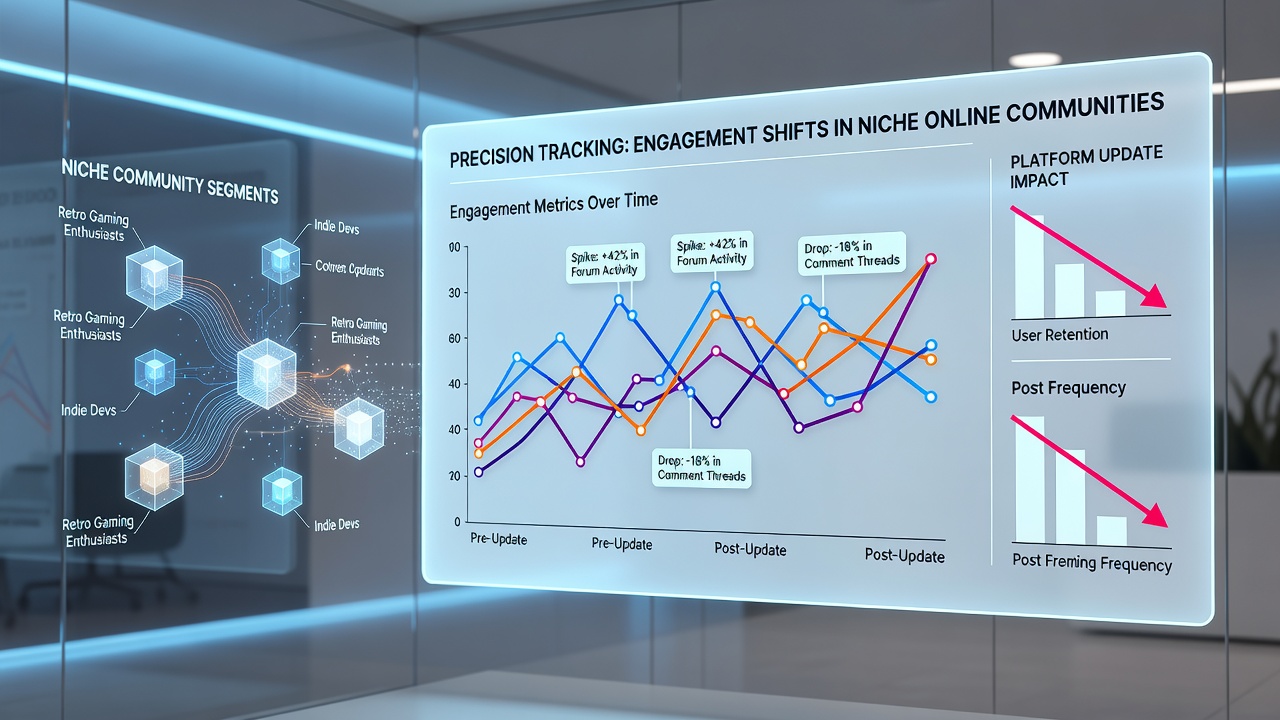
Precision tracking combines first-party community logs with third-party analytics platforms to cross-verify activity spikes, and validation steps include manual sampling of post timestamps against server records to confirm alignment. Teams apply cohort analysis to separate new versus returning users, which clarifies whether engagement drops stem from reduced visibility or from actual member attrition, while heat-mapping tools overlay activity density across hours of the day to detect schedule disruptions caused by ranking changes. According to a report issued by the Australian Competition and Consumer Commission on digital platform transparency, consistent metric collection across multiple update cycles improves predictive accuracy for future shifts, and practitioners have adopted standardized export formats that allow seamless merging of datasets from different services.
Tools Supporting Ongoing Monitoring
Specialized dashboards aggregate signals from push notifications, search indexing status, and external referral traffic, and these interfaces permit real-time alerts when engagement velocity crosses predefined boundaries. Developers integrate machine learning classifiers trained on historical update responses to forecast recovery timelines, and the classifiers draw from features such as post length distribution and media attachment ratios that historically correlate with resilience. Community administrators who implement these monitoring layers report faster identification of content formats that regain traction quickest after distribution rule changes, and comparative studies show that groups using automated alerts regain baseline activity levels several days ahead of those relying on manual observation alone.
Conclusion
Precision tracking of engagement shifts continues to evolve alongside platform infrastructure, and the October 2026 updates demonstrated how coordinated data collection across multiple metrics yields clearer pictures of community adaptation. Researchers and moderators alike apply these methods to maintain continuity in niche spaces, and ongoing refinement of validation protocols supports more accurate attribution of changes to specific update elements. The documented patterns from that period provide reference points for future transitions, while integrated tools enable proactive adjustments that preserve interaction quality across diverse interest groups.